
Leading Beyond the Classroom
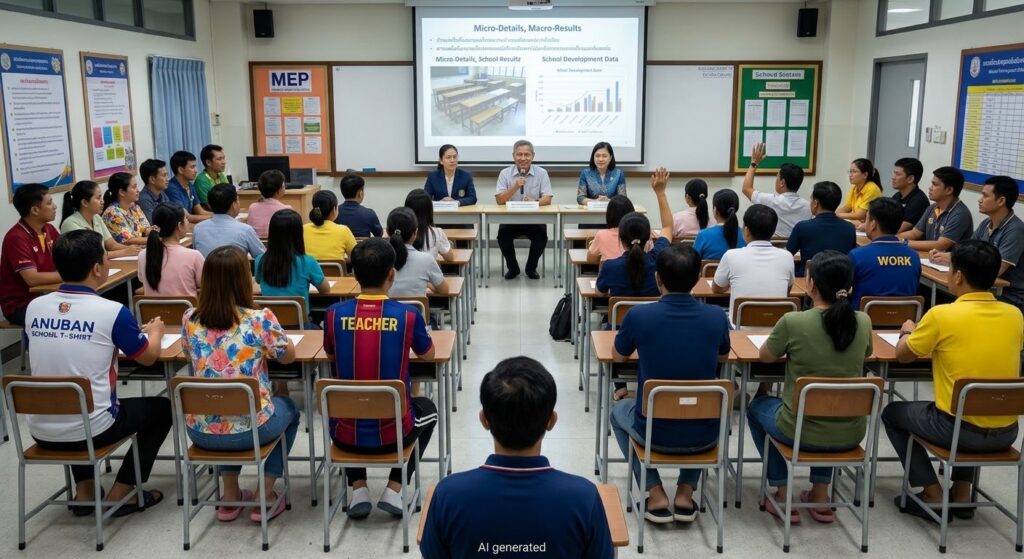
It was October 29 a Thursday. Around 50 of us school staff, teachers, and management-gathered in the MEP grade 6 classroom at Anuban School. The room was completely packed, with everyone sitting silently across four orderly rows. Looking around, the attire was wonderfully diverse: some wore school-named T-shirts, some chose casual dress, and others wore sport attire, with footwear ranging from simple slippers to shoes. Amidst this quiet room, the school director sat between two assistant directors, surveying the entire staff while preparing to speak on important school matters.
What struck me immediately was the deep, respectful silence of the room. Every single staff member was fully focused on the principal. Even though the meeting was delivered in Thai, his captivating and engaging style instantly drew everyone in. It made me realize that when agendas are shared thoughtfully, a routine briefing transforms into a deeply insightful experience.
Rather than holding a rigid, top-down lecture—a dynamic so common in traditional Asian leadership—he built a genuine two-way dialogue. By tossing out questions, he prompted staff to raise their hands and share their opinions. His inclusive approach made every person feel that their voice was heard, their ideas were appreciated, their confusions were answered, and most importantly, that we were treated not as separate groups, but as one united family and team.
He then surprised us by bringing up unexpected physical details—benches, tables, and classroom environments. He showed how uncared-for corners directly impact classroom management, eliciting thoughts from teachers on how micro-details ripple outward to shape student learning, school image, and collective success. He proved how small things drive big results.
Following a clear rhythm of welcoming all ideas without judgment, he shared observations that united everyone in accountability. Then, the assistant directors stepped up to present plans for school development. What amazed me was the dynamic between them: the director sat side-by-side with his assistants, smiling and talking like childhood friends rather than senior figures acting with distant authority.
When the director retook the floor with crucial school performance data, the atmosphere remained warm and open. He listened with extraordinary patience as teachers shared their findings, never correcting or dismissing anyone. Instead, he wanted to truly understand the grassroots reality of what we believed.
What truly shocked me was what he presented next. After absorbing all our feedback, he mapped out precise observations of student habits, classroom dynamics, teaching styles, and physical classroom conditions down to the very smallest detail. And when it came to celebrating the school’s awards, he didn’t claim a single ounce of credit for himself. He deflected every bit of praise back to the staff, making each of us feel deeply recognized and proud to belong.
By the end of it, this wasn’t an administrative meeting. It felt like a family gathering. It felt like a mother and father talking to their children—knowing their strengths, understanding their flaws, and treating everyone as equals bound by a shared home.
Takeaway: True leadership isn’t about wielding power from the top down; it’s about building a culture of trust where every individual feels like family. When leaders listen patiently, honor micro-details, and share the credit, a workplace transforms into a true community.
Call to Action: How are meetings run in your workspace today? Share your thoughts, experiences, or insights in the comments below! Let’s discuss how we can introduce more empathy, active listening, and shared ownership into our teams.