
C2 Proficiency Essay Task (Writing Part 1)
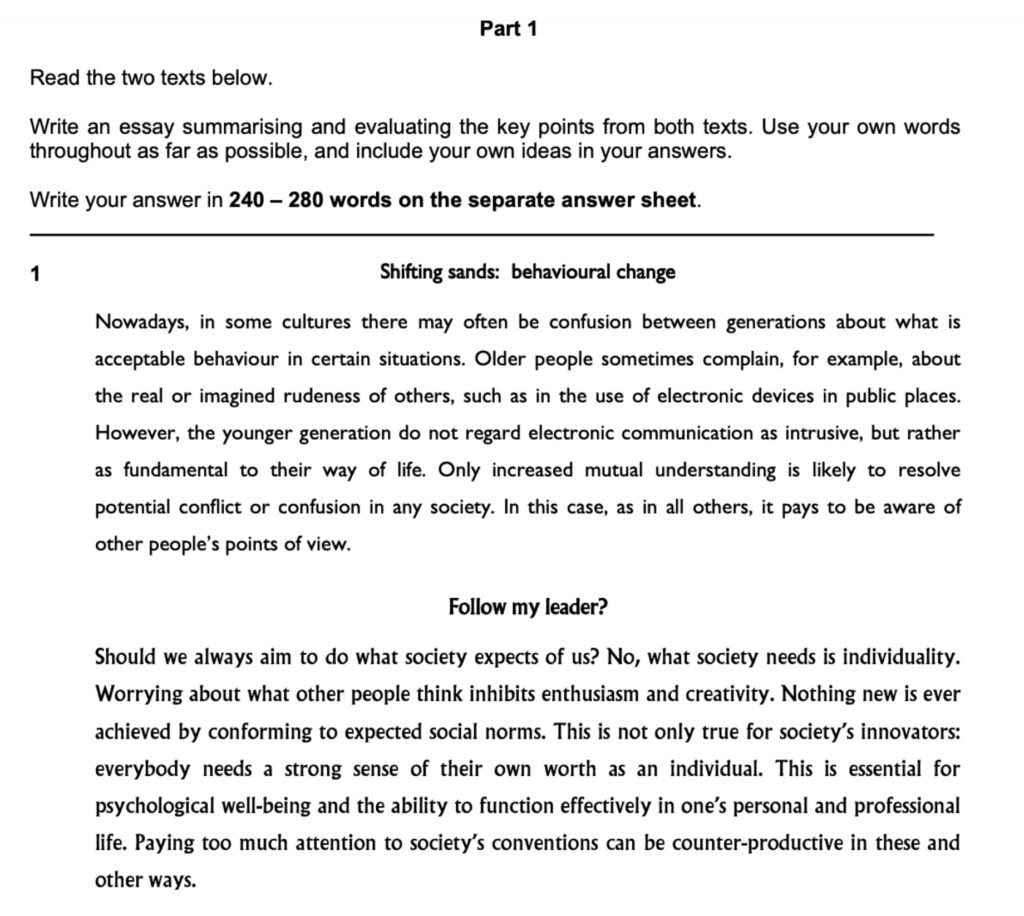
Sample answer 1
Both texts explore modern behavioural norms, but they focus on different aspects of society. The first text addresses the generational friction caused by changing public habits, whereas the second examines the psychological pressure of conforming to societal expectations.
The first text suggests that misunderstandings arise because older and younger generations view public conduct differently. It highlights that while older individuals often condemn modern habits—such as using electronic devices in public—as rude, younger people regard digital connectivity as a fundamental part of daily life. It concludes that mutual understanding is key to resolving these differences.
The second text suggests that we should resist blind conformity because it stifles human potential. It points out that worrying about what others think inhibits creativity, originality, and psychological well-being, arguing instead that true personal and professional growth requires fierce individuality rather than adherence to social norms.
In my opinion, the first text makes a valid point regarding the necessity of cross-generational tolerance; friction is inevitable when social customs shift. However, it focuses too narrowly on minor etiquette. I agree with the second text that individual authenticity matters far more than superficial conformity. Worrying excessively about societal approval is deeply counter-productive, as true innovation and mental well-being stem from independent thought rather than blind obedience.
In conclusion, I believe that while mutual empathy is essential for peaceful coexistence across generations, our primary goal should be to protect personal freedom and individuality. Society progresses not by policing minor changes in public habits, but by encouraging people to think and act for themselves.
Essay Structure: Sample 1
- Paragraph 1: Introduction
- Hook the reader by stating the central theme connecting both texts.
- Briefly outline what each text focuses on.
- Paragraph 2: Summary of Text 1
- Paraphrase the core argument of the first text using completely original wording.
- Paragraph 3: Summary of Text 2
- Paraphrase the core argument of the second text in your own words.
- Paragraph 4: Evaluation & Personal Ideas
- Critically assess both texts, point out flaws or strengths, and inject your own original ideas/counter-arguments.
- Paragraph 5: Conclusion
- State your definitive stance (extent of agreement) and synthesize the final takeaway.
Sample answer 2
How should we navigate the shifting sands of modern social behaviour? Are we obligated to conform to generational expectations, or should we prioritize our own individuality?
In modern society, friction frequently arises between older and younger generations over what constitutes acceptable conduct. Older demographics often express frustration at the perceived rudeness of contemporary habits—such as using electronic devices in public spaces—whereas younger individuals view digital connectivity as an indispensable pillar of their daily existence. Yet, focusing merely on everyday etiquette overlooks a deeper philosophical question. Should we always aim to do what society expects of us?
Inded, worrying excessively about social conventions can prove profoundly counter-productive. When people become overly anxious about what others consider proper, they often suppress their own creativity, originality, and moral judgment. True personal and professional growth does not stem from blind obedience to traditional norms; rather, it requires the courage to cultivate a strong sense of individuality and independent thought.
Nevertheless, this does not mean all social rules should be discarded. The rules that truly matter are those governing mutual respect and consideration for others. Just as cross-generational conflicts require deliberate empathy and mutual understanding to resolve, our daily conduct should balance personal freedom with a mindful awareness of how our actions affect the people around us.
Essay Structure: Sample 2
- Paragraph 1: Thematic Introduction
- Pose an engaging, high-level question or statement framing the core debate of the source texts.
- Paragraph 2: Blended Summary & Transition
- Introduce the specific scenario or surface argument of Text 1 while immediately pivoting into the conceptual question of Text 2, blending summary seamlessly.
- Paragraph 3: Critical Evaluation & Personal Synthesis
- Analyze the deeper implications of the arguments, challenge their limitations, and weave in your own independent philosophy/voice.
- Paragraph 4: Nuanced Conclusion
- Deliver a sophisticated, balanced resolution that ties the whole essay together with a mature final verdict.
I like to speak English I love
Health Is Wealth
The well-being of a person is way greater than the wealth they have. People don’t understand the phrase ‘health is wealth’ at a young age when they torture their body as they wish to and expect that there would be no consequences. The health effects start bothering you once you grow older. Several problems in the body start showing up, and one has to then suffer from a lot of pain. This pain and adverse effects of unhealthiness cannot be cured by money; therefore, it is proven that a person’s true wealth is having a healthy body and mind, which is to be earned by following a healthy lifestyle.